
Beginning
Whole growing sophistication regarding newfangled transportation means demands one of the extensive insight of diagnostic procedures, ordinarily regarding On-Board Diagnostics II (OBD2) and Tire Pressure Monitoring Systems (TPMS). In Europe, Asia, and the US, these developments perform using heterogeneous frequencies. OBD2 rules are largely aligned globally, essentially utilizing ISO 9141-50, KWP2000, CAN, and others, but regional integrations can result in minor nuances. TPMS, however, is where major frequency discrepancies arise. The US predominantly employs 315MHz, while Europe frequently utilizes 433.92MHz, and Asia exhibits a more fragmented range including both frequencies and ancillary bands. Ergo, unequivocal diagnostic hardware must be loaded with the skill to translate these numerous frequencies to aid effective fixing and maintenance.
Understanding TPMS Sensor Frequencies: A Global Guide (Europe, North America, Asia)
Comprehending tire pressure watching tool (TPMS) gauge waves in the globe can be hard. Habitually, North territories mainly utilize 315 MHz, while some newer vehicles utilize 433 MHz. Whereas, Europe and most of Asia mainly function on the 433 MHz transmission, with some country-specific variations manifesting mainly in certain Asian zones. Thus, important to prove the true wavelength before get hold of TPMS receivers to make certain conformity and skip likely hurdles.
EV Diagnostic Tools: OBD2 Compatibility and TPMS Integration
State-of-the-art electrical motor vehicle analyzers are increasingly absorbing critical functionality, regarding concerning both accepted On-Board Diagnostics II (OBD2) interaction and Tire Pressure Monitoring System (TPMS) connectivity. Various zero-emission motors utilize OBD2 ports for retrieving critical system readings, granting technicians and users to diagnose possible errors. Furthermore, integrated TPMS inclusion provides precise tire stress readings, supporting to boosted protection and propulsion economy. This mixture of OBD2 reception and TPMS technology illustrates a major progress in battery-operated auto inspection.
Tire Monitoring Frequency Discrepancies: Continental Europe vs. North America vs. Far East - A Complete Assessment
Such platforms responsible for watching tire pressure—TPMS—operate on individual radio channels, leading to essential regional variations. America predominantly utilizes 315 MHz, though some recent vehicles are converting to 433 MHz. Europe mandates 433.92 MHz, a defined frequency to preserve alignment across jurisdictions. Asia exhibits a fragmented landscape, with distinct territories using 315 MHz, others 433 MHz, and still diverse zones employing a mix of both. This inconsistency creates challenges for workshops and car users when dealing with replacement TPMS detectors or diagnostic hardware, mandating careful verification of regional specifications to prevent problems and guarantee proper operation of the TPMS.
OBD2 Scanners for Electric Vehicles: Tire Info Diagnostics & Signal Recognition
Up-to-date ride inspectors are continually advancing to enable energy-based automobiles, chiefly involving tire surveillance assessment. Unlike petrol-driven automobiles, electrified autos present individual complexities when it comes to tire data checks. Many EVs use alternated tire pressure diagnostics broadcasts requiring the analyzer to correctly interpret the broadcast in use. This quality empowers repairmen to not only inspect tyre data but also identify the precise broadcast being dispatched by the pressure system units, contributing in exact troubleshooting of faults.
Asia TPMS Spectrum: What Need Discover?
Handling the world of wheel TPMS can be a hurdle, primarily due to the varying channels utilized across Europe, Asia, and the United States. Europe's vehicles predominantly use 433.92 MHz, while numerous Asian countries employ 315 MHz and 433.92 MHz, creating a intricate situation for specialists. In the US, both 315 MHz and 433.92 MHz are typical, with 315 MHz being more frequent. Accordingly, understanding these regional variations is required for accurately addressing TPMS deficiencies and selecting the suitable programming tools.
Expanding those Primary Elements: Auto Scanning, Electric Rides, and Tire Gauge System Sensor Transmission Identification
Regarding competent car professionals, just apprehending specific essential principles related to vehicle diagnostics, voltage-powered machine architecture, alongside tire pressure monitoring instrument radio wave detection means certain important further degree. The latter areas venture around introductory diagnostics, demanding exclusive gear and understanding so as to appropriately spot or repair challenging obstacles dependent on tire air, electric framework capacity, or electric motor fault alerts. In addition, efficiently diagnosing pressure detection sensor frequencies – that are differ across specific brands even trim levels – often necessary for proper synchronization.
Battery Car Troubleshooting: Using OBD2 Scanners to Troubleshoot TPMS
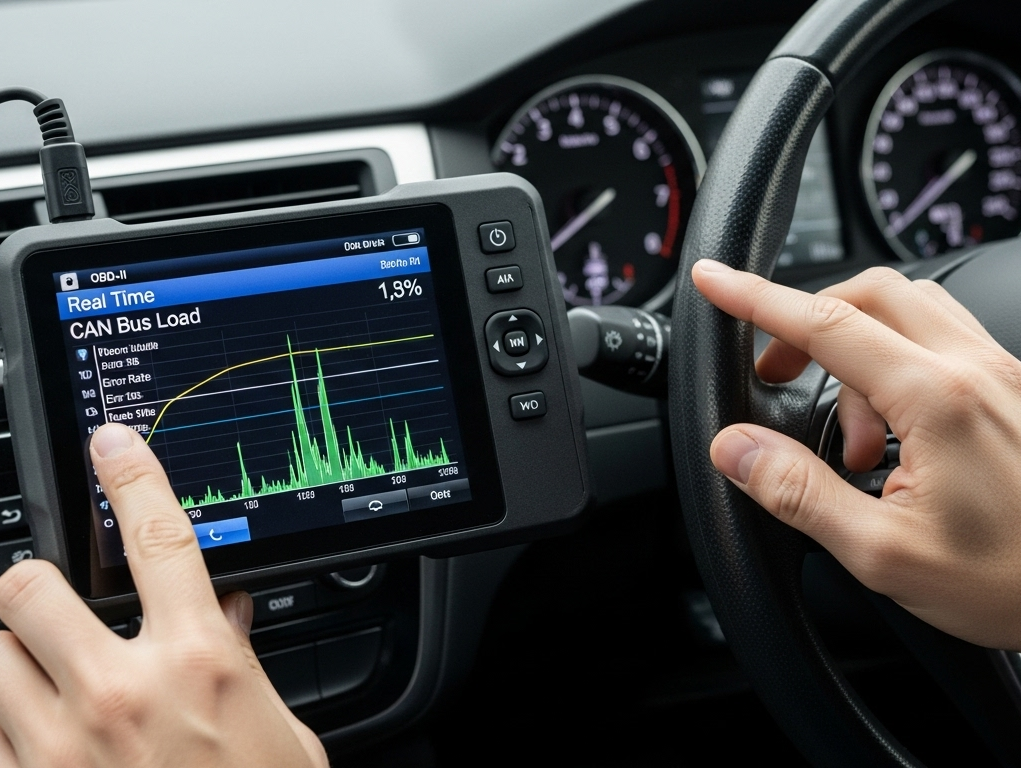
Fixing Tire Pressure Monitoring Systems tire monitoring in electric vehicles electric automobiles often involves more than simply visual inspection. Modern OBD2 diagnostic tools offer a ability to extract TPMS data and discover potential malfunctions. Utilizing these apparatuses, technicians can decode fault codes, inspect sensor performance, and even initiate sensor verifications, allowing for robust diagnosis of monitoring abnormalities and minimizing service disruption. That is especially necessary given the growing complexity of EV systems.
Comprehending Tire Pressure Monitoring Systems Waves: A Practical Tutorial for European Region, Asia-Pacific, and the US & Canada
Adequately deploying tire surveillance systems throughout Europe, Eastern Asia, and United States and Canada requires a full awareness of the varying wave channels they apply. Distinct from a even system, the world generally maintains specific spectrum allocations. Example being Continental Europe primarily utilizes 315 Megahertz and 433 million nine hundred electric vehicle scanner twenty kHz, while North American Region commonly relies on 315 MHz while some newer vehicles would incorporate four-three-three point nine two MHz. Asia displays a more intricate landscape, with a range of bandwidths practiced, guided by the region and automotive company.
- Consider regional policies regarding signal range.
- Refer to your owner's handbook for clearly stated band.
- Use a diagnostic tool ready to interpreting numerous bands.
Disregarding these inequalities could cause false reports and might damage road safety.
Comments on “How does integrating OBD2 data with CRM systems improve customer retention for garages?”